In March, leading clinicians and researchers gathered in Orlando, Florida for the Hemostasis and Thrombosis Society’s (HTRS) Scientific Symposium. This meeting fosters perspectives from clinical practice, industry, and basic and translational science, allowing novel ideas to be exchanged and the latest research to be shared on hemostatic and thrombotic disorders.
At HTRS 2023, PicnicHealth had the opportunity to learn more about the current challenges and opportunities in this research area. One of the recurring themes across sessions was the need for a better understanding of the holistic patient journey, with an emphasis on the important information that can be gained from real-world data (RWD). This included discussions on:
- Diagnostic challenges for diseases with variable presentations, such as von Willebrand disease, which affects the patients’ ability to receive prompt and consistent care
- Diagnostic tools that can leverage multifaceted data (labs, acute events, and treatment) to reliably identify patients treatment needs
- The need for more data on understudied populations, such as perimenopausal women with sickle cell disease
- The burden of disease and its impacts on quality of life for patients with chronic conditions, such as hemophilia
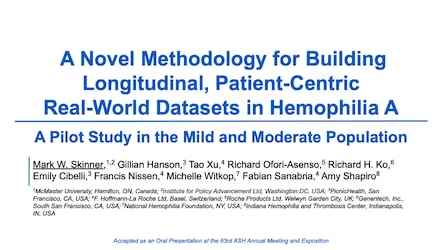
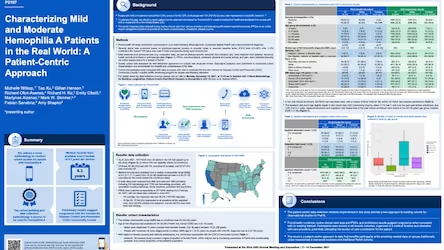
Our own established expertise and experience leveraging RWD from hemophilia patients’ medical records has provided valuable insights for our life sciences partners on the real-world patient journey. PicnicHealth is proud to have co-authored two posters at the HTRS Symposium that demonstrated how this data is currently being used by our life science partners.
Treatment Burden and Unmet Needs in Hemophilia Patients with Inhibitors: Results from a Real-World Observational Study in the United States (co-authored with partners at Novo Nordisk)
The unmet needs of patients with hemophilia are poorly understood, even as treatments improve. In this study, we examined the treatment burdens and unmet medical needs reported by patients with hemophilia A and B. This analysis focused on patients who have inhibitors, which prevent standard treatments from working effectively to stop bleeding. Patients reported physical and mental burdens, including treatment-related pain, limited physical functioning, as well as worry and frustration related to their treatment. The impacts of the disease coupled with the current health care management options for patients highlights the need to diversify treatment options for this population.
View Poster
Common Documentation Errors in the Electronic Health Records of Persons with Hemophilia B (co-authored with partners at Pfizer)
In this study, we examined medical records where persons with hemophilia B (HB) had erroneous mentions of hemophilia A (HA). While the overall number of HA errors were small in comparison to correct HB diagnoses, most HB patients had some errors in their medical records. These types of errors can affect the accuracy of analyses - for example, studies that identify all patients with an HA diagnosis would also include these patients who actually have HB. Although chart review by a trained clinician gives the highest accuracy for proper patient diagnosis identification, it is not always possible. In all other instances, the total history of a patient’s medical journey (i.e., treatments, labs, and diagnoses) should be considered.
View Poster
The studies presented at the HTRS Scientific Symposium showcase some of the many ways PicnicHealth is partnering with leading researchers to deliver robust real-world evidence and improving patient care across different therapeutic areas, including rare diseases, hematology, immunology, neurology, and oncology. To learn more about our hemophilia cohort or the PicnicHealth research platform, contact us today.