
Resources & Articles
Keep up with key industry trends and discover more about our approach to non-interventional research.
Thank you! Your submission has been received!
Oops! Something went wrong while submitting the form.


Filters
Meet PicnicHealth’s Clinical Research Nurse
Check out this Employee Spotlight on our Clinical Research Nurse who supports the design and implementation of products to enhance our data capture capabilities.
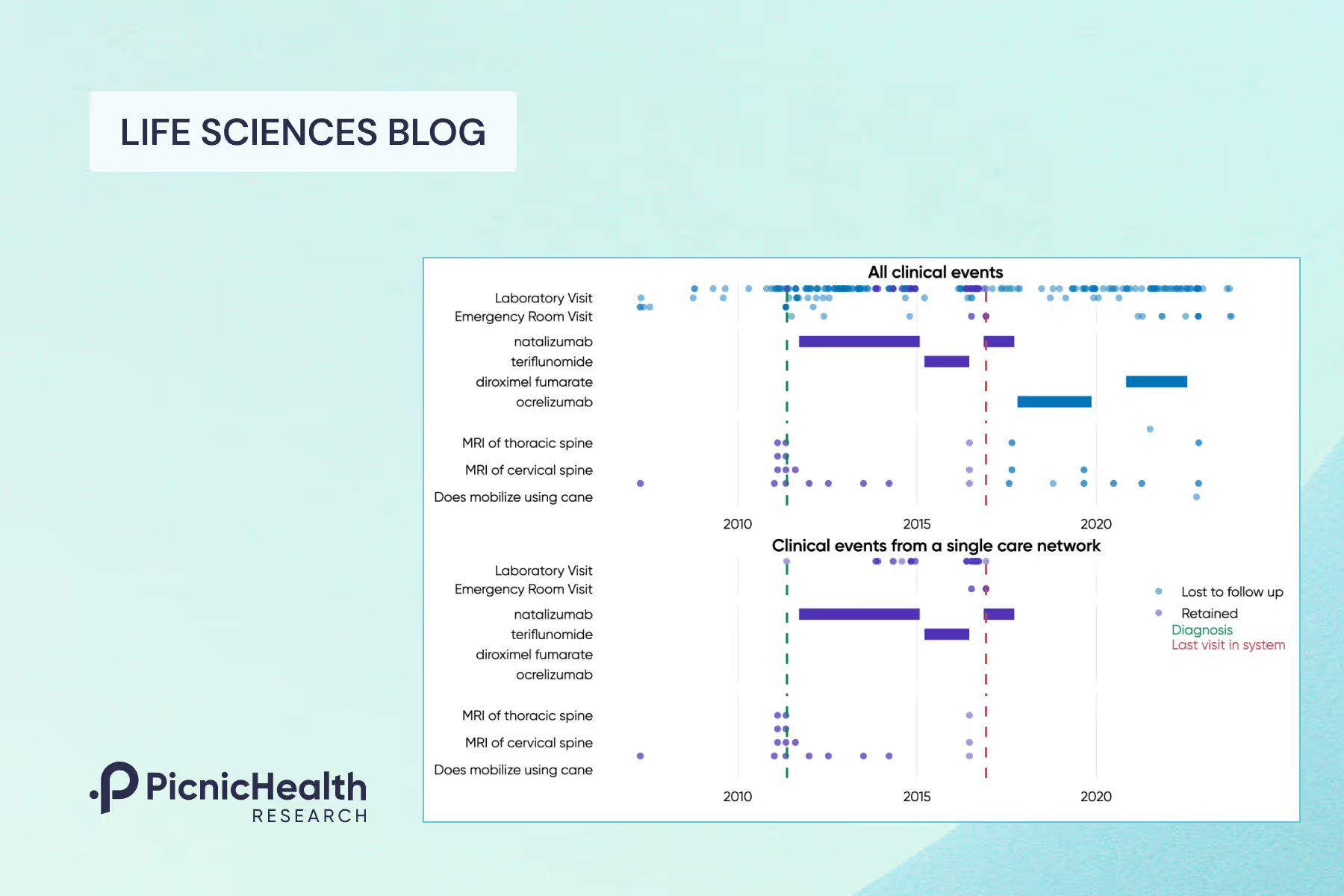
Generating fit-for-purpose evidence: The value of collecting data from all sites of care
Site-based studies can miss critical insights on the patient journey. This analysis compares data availability of a single network to PicnicHealth’s approach.

Revolutionizing Healthcare: How AI is Simplifying Medical Data with PicnicHealth
At Web Summit 2025 in Lisbon, our Co-founder and CTO, Troy Astorino, shared his thoughts on how AI can enable patient-focused care and research participation. He discusses how PicnicHealth simplifies access to diverse information sources and drives improved health outcomes. Check out this recap of his discussion!
A Tailor-made Approach to Simplify Observational Research
Our Chief Medical Officer, Dan Drozd, MD, MSc, shares his insights with MedCityNews on the evolution of research and how PicnicHealth’s approach is tailored to meet the unique needs of observational research. Discover his perspective on the crucial role of observational research in integrating the patient voice and supporting innovative therapy programs like CAR T.
Observe Ahead of the Curve
Understand the role that AI and observational research should play in modernizing research, with Noga Leviner, Co-founder and CEO of PicnicHealth.
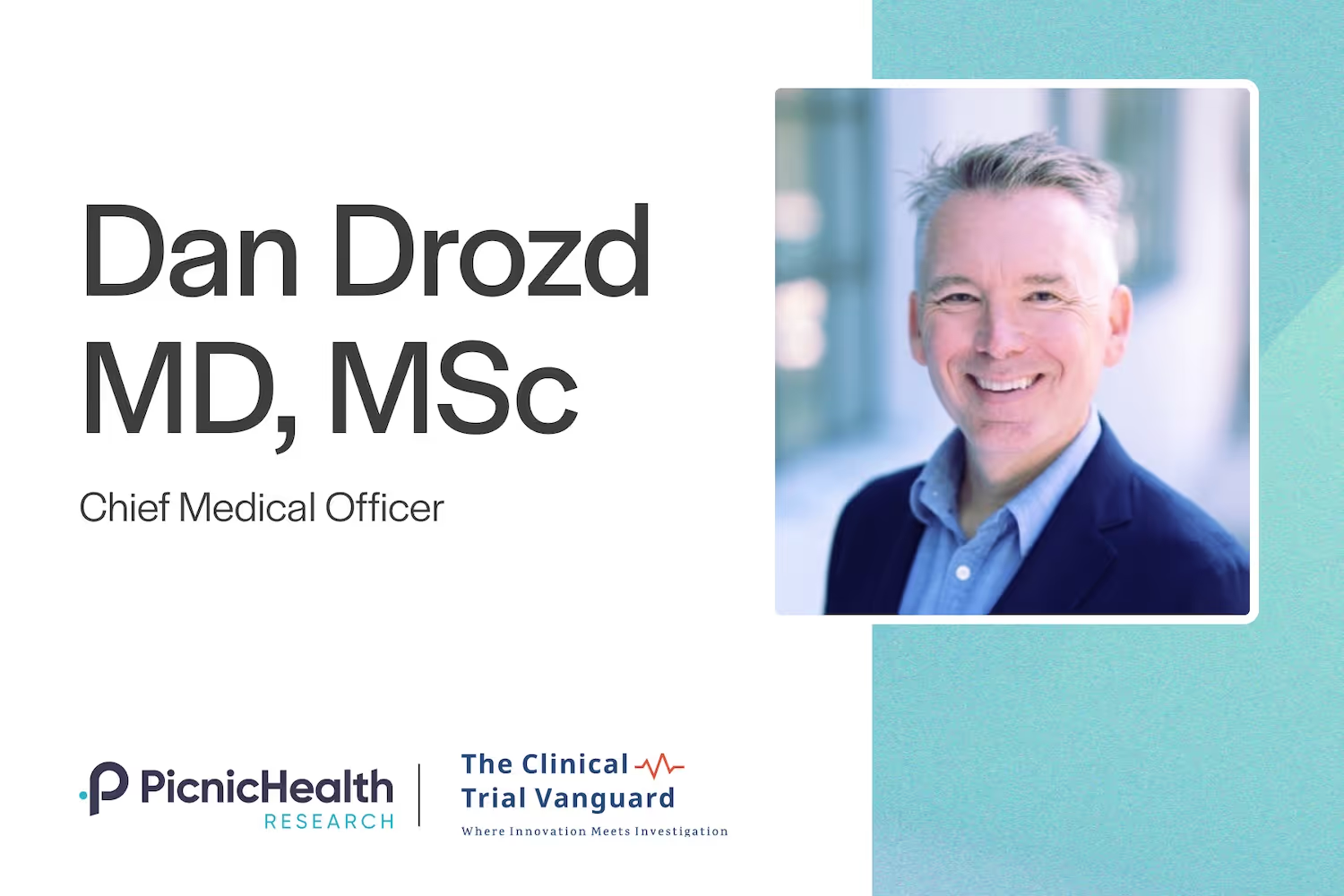
Navigating the Future of Clinical Trials: Insights from PicnicHealth Chief Medical Officer
Hear from a research expert about his modern approach to clinical trials, incorporating truly patient-centric measures and modern tools for trial success.
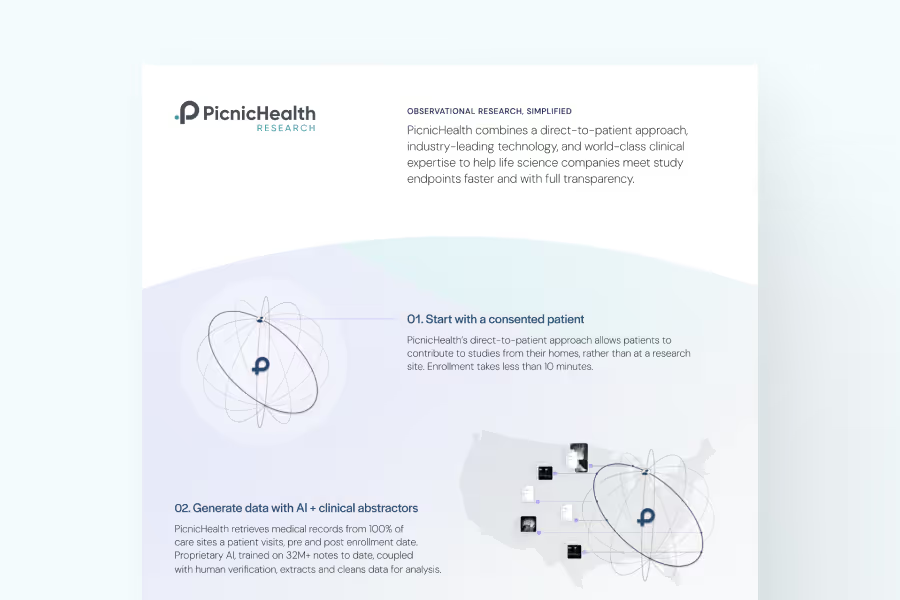
The Modern Approach to Non-interventional Research
PicnicHealth combines a direct-to-patient approach, industry-leading technology, and world-class clinical expertise to help life sciences companies meet study endpoints faster and with full transparency. See how we’ve modernized our approach to observational research, and how we are simplifying research for our sponsors.
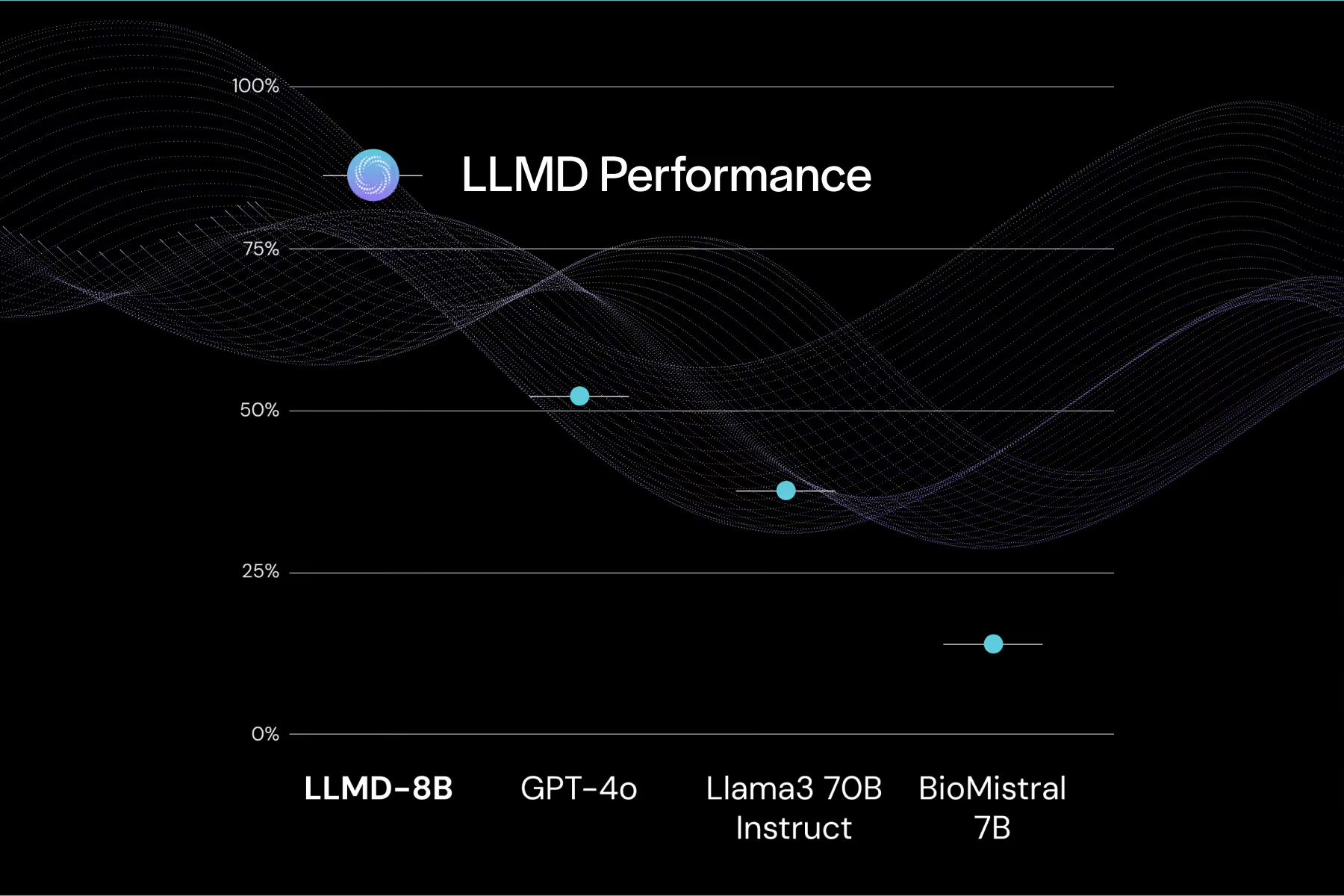
Introducing LLMD, PicnicHealth’s large language model for more efficient research
Today, PicnicHealth released a preprint on LLMD, its state of the art medical large language model (LLM). LLMD achieves human-level accuracy when extracting clinical insights from medical records, and outperforms the most powerful and general and industry-specific LLMs. This model highlights how AI can realize the potential of real-world data (RWD) and offers life science companies a more efficient, powerful way to gain valuable clinical insights.
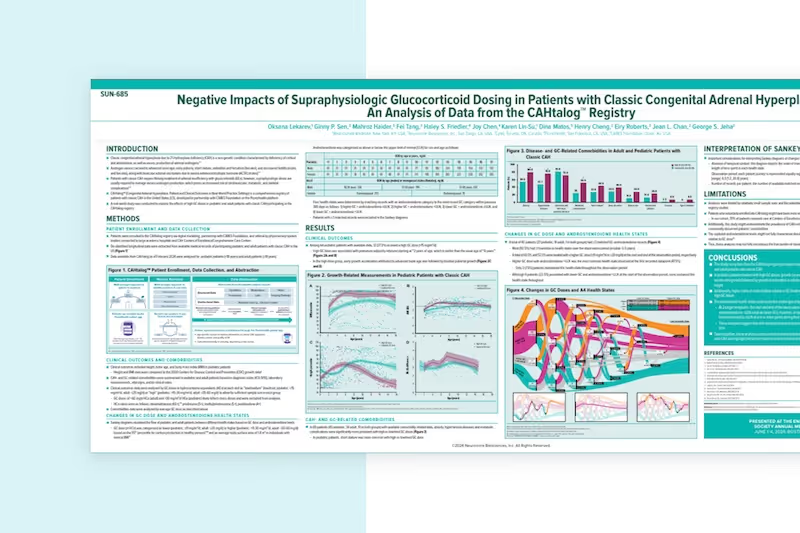
PicnicHealth Research Roundup
PicnicHealth is simplifying observational research by combining a direct-to-patient approach, industry-leading AI and technology, and world-class clinical expertise to capture the patient experience in an unprecedented level of detail.
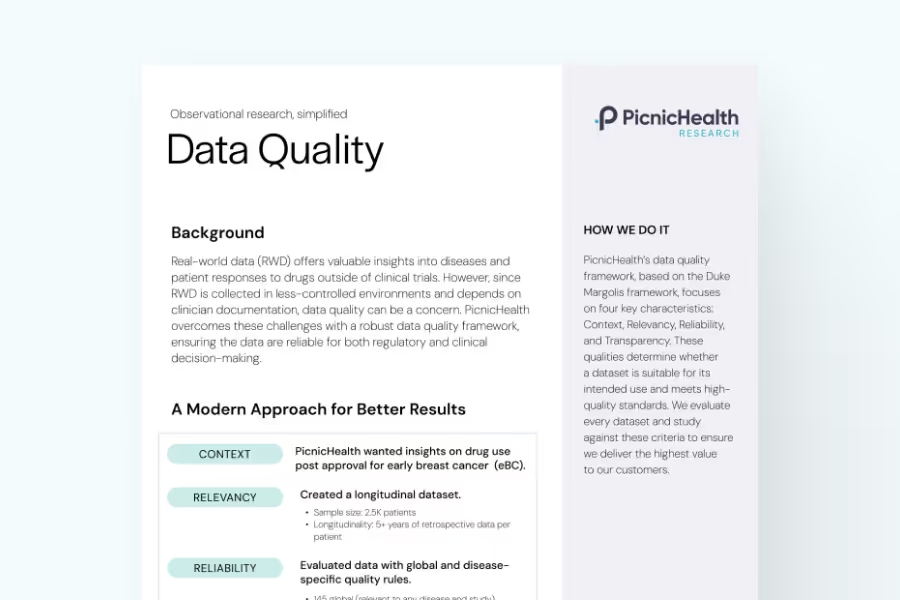
Data Quality: Fact Sheet
Ensure high data quality in your observational study with an experienced partner. Learn more about how PicnicHealth ensures quality data collection.
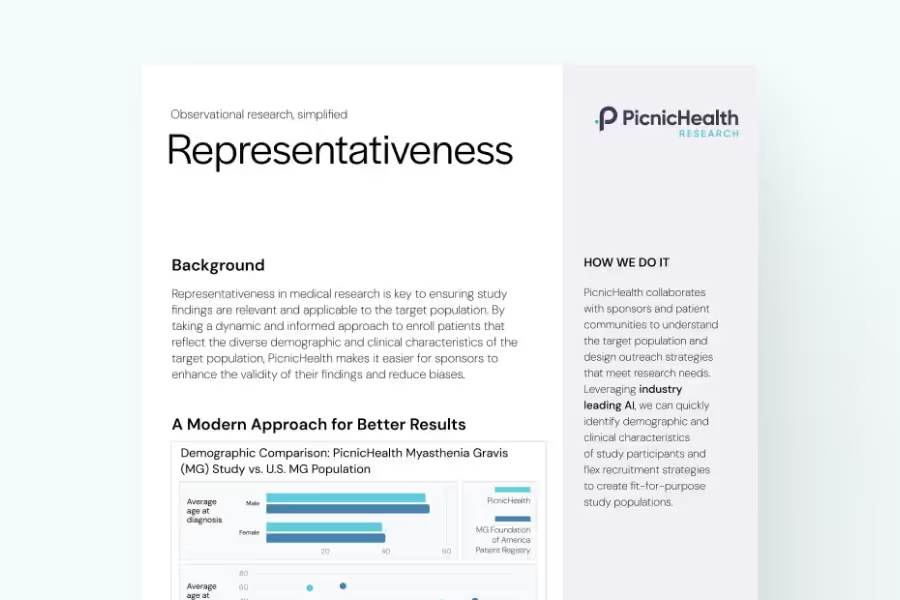
Representativeness: Fact Sheet
Ensure your observational study enrolls a representative population by working with an experienced observational research partner. Learn more about PicnicHealth.
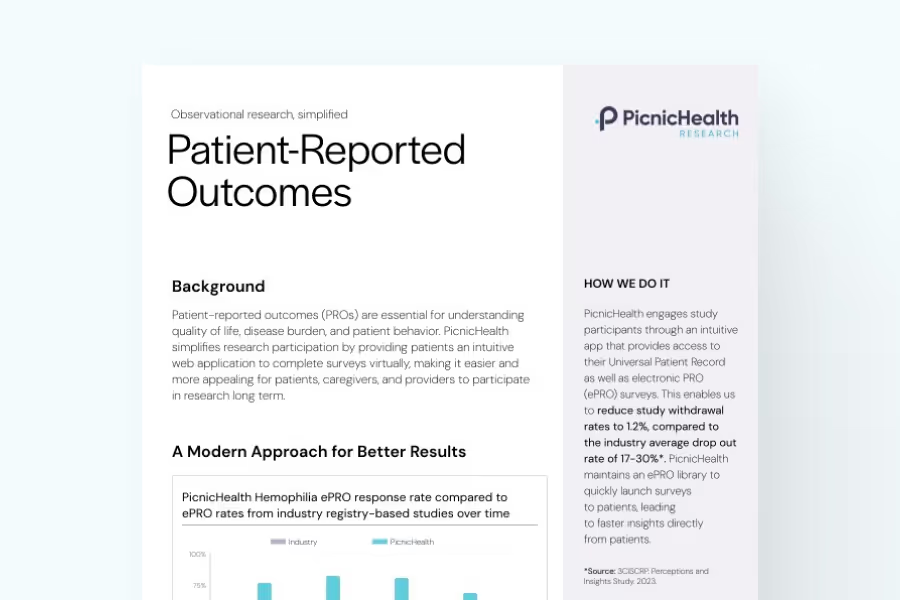
Patient Reported Outcomes: Fact Sheet
Capture long-term patient-reported outcomes (PROs) in your observational study with PicnicHealth. Learn more about our services in our fact sheet.
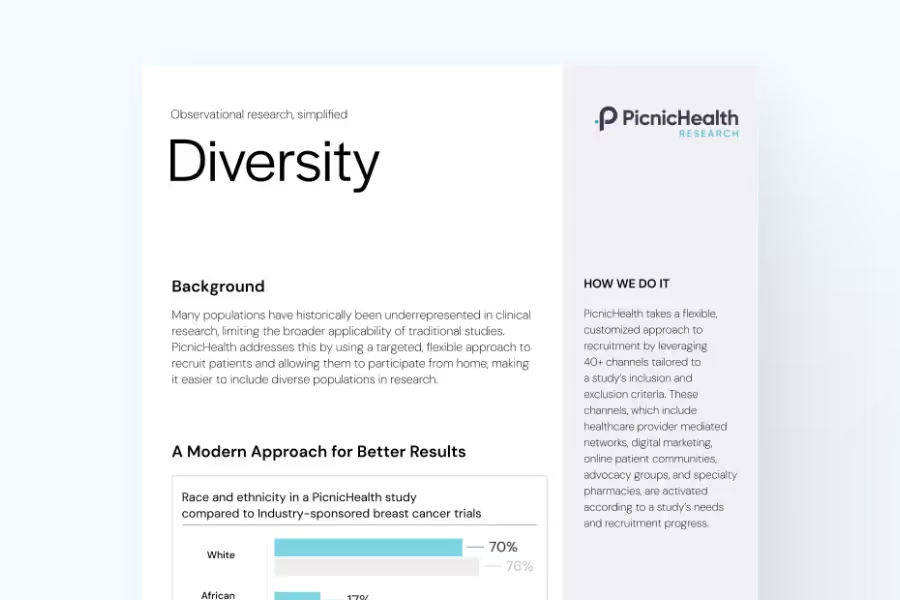
Diversity: Fact Sheet
Increase the patient diversity of your observational study with a virtual platform that increases patient accessibility. Learn more about PicnicHealth.
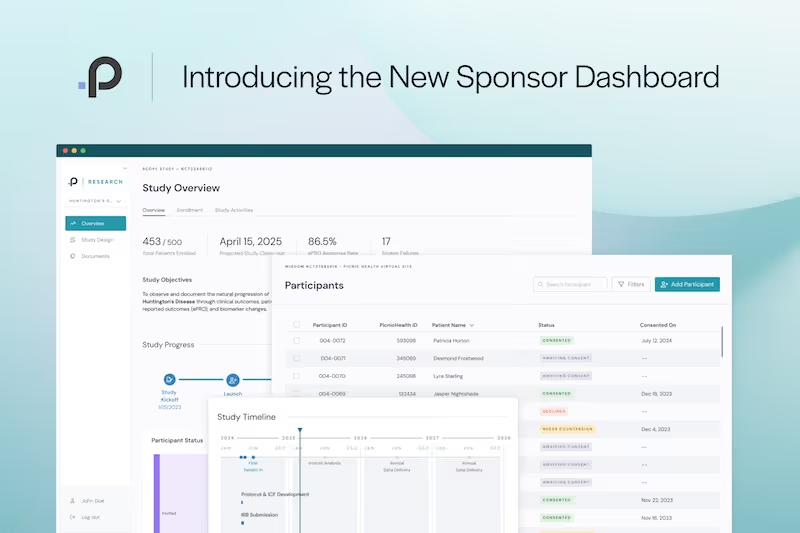
New at PicnicHealth: Introducing the New Sponsor Dashboard
We’re excited to unveil our latest enhancement to PicnicHealth Run—an innovative suite of study management tools designed to ensure the seamless execution of end-to-end studies. As part of this suite, we are proud to introduce the Sponsor Dashboard, a powerful new feature of the Sponsor Portal that gives research study sponsors unparalleled real-time insights into study details and progress, all in one place.

Introducing the PicnicHealth Virtual Site
Site-based approaches to observational research can be burdensome, time-consuming, and costly for sponsors, patients, and site staff. To address these challenges, we’re excited to introduce the PicnicHealth Virtual Site.
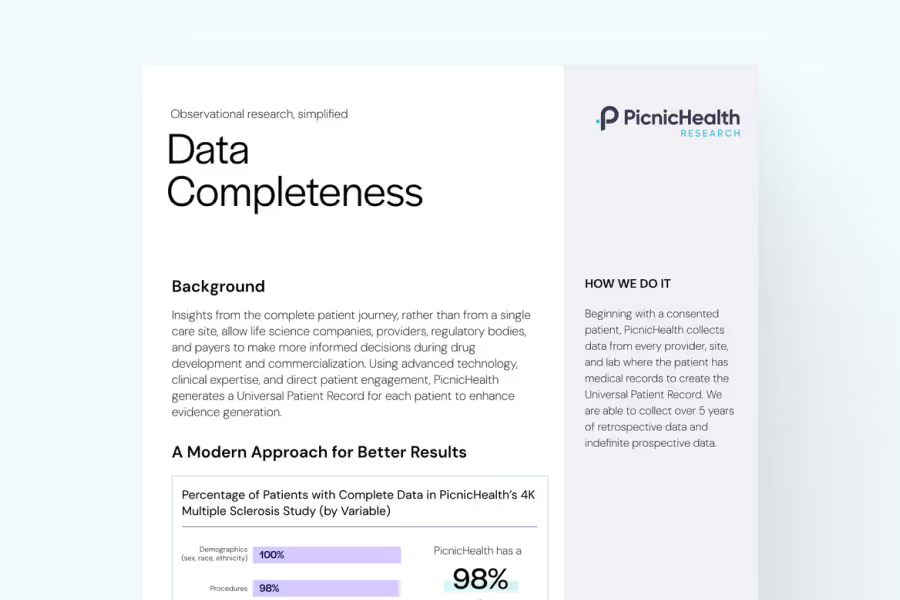
Data Completeness Fact Sheet
PicnicHealth provides life science companies with better and more comprehensive patient journey insights for informed decision making in observational research studies. Check out this fact sheet to learn more about our Unified Patient Record and how it enhances evidence generation for better results for our sponsors.

The Power of AI in Pharma to Achieve Regulatory-Ready Studies
Observational studies are instrumental in learning about the natural history of diseases and the impact of treatments on patients in real-world settings. These studies are more impactful and generalizable when they incorporate: 1) deep clinical phenotypic and outcome data, not just administrative-coded data; 2) a diverse group of participants, not just patients at a small number of academic sites; and 3) comprehensive data from across the patient journey not limited to a single clinic, hospital, or healthcare system.
Decentralized Clinical Trials: Bust or Breakthrough?
Explore the fundamental opportunity within decentralized and hybrid observational trials with PicnicHealth’s CTO and Applied Clinical Trials
Medical Affairs and the Real World
Medical Affairs & the Real World: How PicnicHealth's model is providing a unified view of patient care and simplifying observational research

Making Patient Data Usable: Q&A with Noga Leviner
AI is changing how biopharma companies clean, organize, structure, and abstract information at a much faster speed and greater scale than a person or team of people ever could. We can now gather and curate data more efficiently and complete manual, tedious tasks easier to unlock new insights.
Considerations for the use of real-world evidence in non-interventional studies: Comments for the FDA
Earlier this year, the FDA published a guidance document titled “Real-World Evidence: Considerations Regarding Non-Interventional Studies for Drug and Biological Products”, that provides study design and analysis recommendations to sponsors looking to use real-world data (RWD) in observational research. This guidance, which emphasizes the potential for real-world evidence (RWE) to meet regulatory standards for evidence generation, underscores the FDA's recognition of RWE as a valuable component in drug and biological product evaluation.

What we mean by “Messy” Real-World Data
Real-world medical records quickly break common assumptions used to develop AI techniques in academic settings, and it’s these real-world issues that make our job difficult and interesting. They’re also the reason that “pretty good on a benchmark” has never translated into a great solution for the tasks we train on.

Building a Personal Medical AI
PicnicHealth’s AI strategy is focused on building personal medical AI that helps patients get better care and, through our research-focused products, eventually better therapeutic options. To do this, our approach to large language model (LLM) development introduces a distinctive dimension – we bring generalized medical knowledge together with a detailed understanding of a patient’s own medical journey by interpreting their records.

The Role of AI in Observational Research | Q&A with PicnicHealth Chief Technology Officer and Co-founder, Troy Astorino
This week PicnicHealth unveiled PicnicAI, an AI-driven platform designed to rapidly unlock unified medical records and deliver accurate insights for patients and life science companies.
From AI to telemedicine: Transforming clinical trial recruitment in 2024
Recruitment is essential for generating data on drug efficacy, which is crucial for the approval of new medical treatments. Clinical trial success hinges on the ability to recruit a sufficient and appropriate number of participants.
No results found.
There are no results with this criteria. Try changing your search.