Welcome to our latest Research Roundup. In this series, we highlight the latest research conducted through PicnicHealth Research.
PicnicHealth is simplifying observational research by combining a direct-to-patient approach, industry-leading AI and technology, and world-class clinical expertise to capture the patient experience in an unprecedented level of detail.
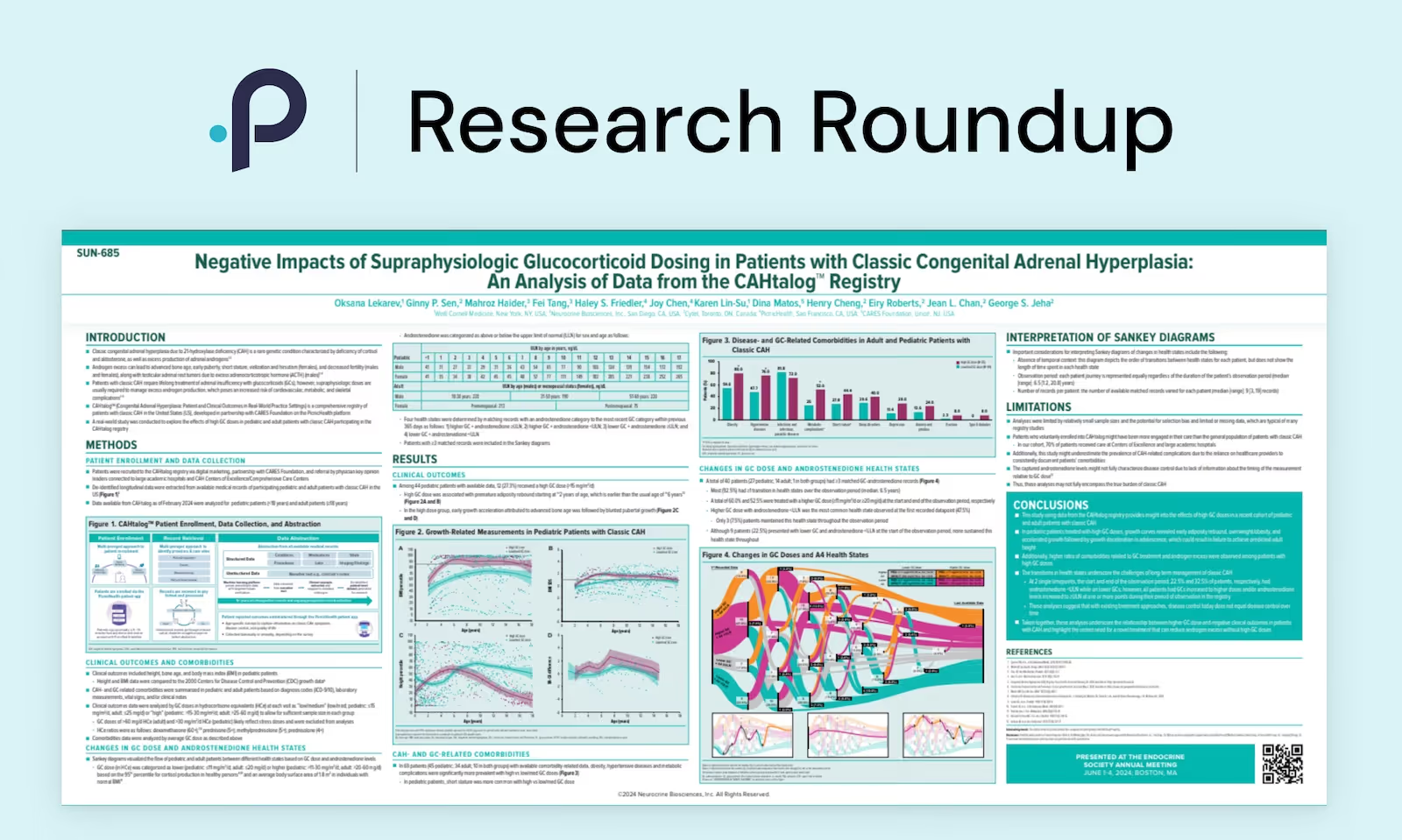
Glucocorticoid Treatment Patterns in Pediatric and Adult Patients with Classic Congenital Adrenal Hyperplasia: Results from the CAHtalog™ Registry
Background: Classic congenital adrenal hyperplasia (CAH) is a rare genetic disorder that affects patients’ adrenal glands and disrupts androgen production. The only available treatments are life-long use of glucocorticoids (GC) and mineralocorticoids. Glucocorticoid use at supraphysiologic doses can have substantial adverse side effects with long-term use. The CAHtalog™ registry, developed by PicnicHealth in partnership with the CARES Foundation, contains over five years of data abstracted from the structured and unstructured medical records of patients with classic CAH, collected across all their U.S. sites of care. This study aimed to characterize the effects of high GC doses on pediatric and adult patients with classic CAH.
Methods: This analysis included 69 patients (45 pediatric patients, 34 adult patients, with 10 in both groups) with classic CAH from the CAHtalog™ registry. The study assessed growth related measurements, GC-related comorbidities, and androstenedione control by GC treatment dosing regimens over time.
Results: The study showed that patients with higher GC doses generally had higher proportions of GC-related comorbidities. Pediatric patients with high GC dosing were more often overweight/obese and had accelerated growth followed by deceleration during adolescence, which could affect future adult height. GC dose and/or androstenedione levels changed extensively over time in a longitudinal patient journey analysis, demonstrating the challenges of long-term management of classic CAH.
How PicnicHealth simplified this observational study
PicnicHealth’s platform played a crucial role in streamlining data collection for this study. By enabling patients to enroll virtually and access their complete medical history through a user-friendly portal, PicnicHealth simplified the process of gathering comprehensive, longitudinal data, with a mean observation period of 10 years for pediatric patients and 16.8 years for adult patients. This approach allowed for the efficient extraction of both structured and unstructured data, providing a detailed picture of each patient's medical journey and enhancing the accuracy of the research findings.
See the full poster here.
Progressive Supranuclear Palsy (PSP) Disease Progression, Management, and Healthcare Resource Utilization: A Retrospective Observational Study in the US and Canada
Background: Progressive supranuclear palsy (PSP) is a rare neurodegenerative disease characterized by rapid progression and a variety of debilitating symptoms, including balance issues, gait impairment, and cognitive dysfunction. PSP often remains undiagnosed for years, complicating patient management and care. This study aimed to provide a comprehensive understanding of PSP disease progression, management, and healthcare resource utilization.
Methods: The study retrospectively analyzed medical records, collected from over 194 healthcare centers, from 72 patients with PSP. Approximately eight years of data was collected from each patient. Researchers focused on key clinical outcomes such as the onset of PSP symptoms, the use of healthcare resources, and the progression of disability over time.
Results: The findings revealed that most patients experienced significant motor and cognitive impairments before diagnosis, with falls and gait problems being common early symptoms. The study also highlighted a high reliance on healthcare resources post-diagnosis, including the use of assistive devices, medications, and supportive care. Despite the use of these resources, the disease's rapid progression continued to severely impact patients' quality of life.
How PicnicHealth simplified this observational study
PicnicHealth* enabled the comprehensive collection and abstraction of medical records from multiple healthcare centers. By partnering directly with PSP patient communities for recruitment, the study was able to build a recontactable cohort of patients, facilitating long-term research and follow-up. This patient-centric approach not only streamlined the research process but also made participation more accessible for individuals with PSP, who often face mobility challenges. This study provided valuable insights into diagnosis and management of PSP, which could be used to improve patient’s experiences before and after a PSP diagnosis.
Read the full manuscript here
*This study was originally conducted by AllStripes, a platform dedicated to generating evidence about the rare disease community, which was acquired by PicnicHealth in 2023.
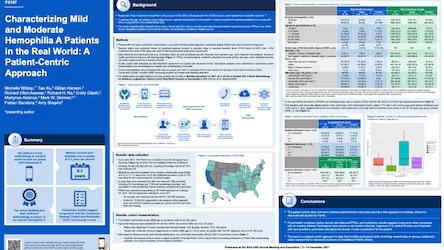
Multiyear, real-world, retrospective cohort study using a patient-centric approach to evaluate the burden of haemophilia B in the United States
Background: Hemophilia B is a rare bleeding disorder characterized by spontaneous bleeding episodes, particularly into joints and muscles. These episodes can cause long-term joint damage and significantly impact patients' quality of life. The current standard of care for hemophilia B is prophylactic treatment. This study assessed the real-world burden of hemophilia B in the United States over a five-year period, as traditional data sources often lack comprehensive details on disease severity, bleeding events, and treatment outcomes.
Methods: The study included 93 male patients with hemophilia B, identified through social media, provider partnerships, and patient advocacy groups. Retrospective unstructured and structured data were collected from 2015 to 2020 across all sites of care, focusing on patients' medical records, including annualized bleeding rates (ABR), comorbidities, and treatment regimens.
Results: The study found that prophylaxis use increased with disease severity, with 86% of patients with severe hemophilia B receiving prophylactic treatment compared to 40% of those with mild/moderate disease. Common comorbidities included arthropathy, synovitis, and mental and behavioral disorders. The mean ABR was higher in patients with severe disease compared to those with mild/moderate disease, reflecting the ongoing burden of illness despite prophylactic treatment.
How PicnicHealth simplified this observational study
PicnicHealth’s platform facilitated the collection of comprehensive medical records across multiple institutions, regardless of the provider system. By digitizing these records and integrating structured and unstructured data, PicnicHealth enabled the researchers to capture a detailed and accurate picture of each patient’s disease progression and treatment outcomes. While traditional methods of conducting research require high patient engagement to capture bleeding events, PicnicHealth’s approach of using narrative text extraction reduced the burden on patients and researchers, allowing for a more efficient and thorough analysis of the real-world impact of hemophilia B.
Read the full manuscript here
—
See more posters and publications at research.picnichealth.com/publications, and explore how PicnicHealth can drive your observational study forward at research.picnichealth.com.