The American Society of Hematology (ASH) 64th Annual Meeting was recently held in New Orleans. PicnicHealth’s research partners Roche-Genentech and other key opinion leaders in the hemophilia space including Anjali Sharathkumar (University of Iowa, Carver College of Medicine, Iowa City, USA), Angela C. Weyand M (University of Michigan, Ann Arbor, USA) Yanrong Jiang University College London Hospitals NHS Foundation Trust, London, UK), Hwai Jing Hiew MD (University Hospital Southampton NHS Trust, Southampton, UK), and Katya Moreno presented data from PicnicHealth’s Hemophilia Cohort in an oral podium presentation, as well as a poster session.
The oral presentation examined the epidemiology and bleeding phenotype in females with mild Hemophilia A (FwHA), a minority group that is poorly characterized, compared with a cohort of males with mild HA (MwHA). This study identified that FwHA have significantly higher baseline factor VIII (FVIII) levels compared to MwHA. Unlike 13% of MwHA in the study, FVIII inhibitors were not identified in FwHA. However, on-demand FVIII concentrate usage was similar in both groups with 47.8% of FwHA and 51.1% of MwHA receiving FVIII.
Additionally, FwHA were shown to have a higher prevalence of iron deficiency anemia, greater access to hemophilia treatment centers, lesser FVIII prophylactic treatment usage and shorter length of FVIII prophylactic treatment. Although, these findings were not significant due to low sample size.
The research team will continue to recruit more patients into the cohort, collect more medical records and engage with patients through patient reported outcomes (PROs) to better understand the difference among FwHA and MwHA stratified by variables such baseline FVIII levels.
View slides presented: Characteristics and Bleeding Behavior of Females with Mild Hemophilia A: Longitudinal Study from PicnicHealth Hemophilia A Database
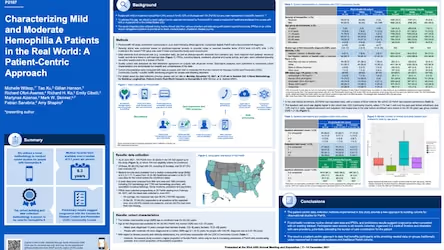
A second study explores the epidemiology of mild and moderate Hemophilia A and evaluates the effects of various demographic variables and the COVID-19 pandemic on use of healthcare facilities.
While there was no notable difference in visits to facilities by disease severity, race or inhibitor status, the descriptive analysis found variation in the geographical distribution of healthcare facilities and visits by people with Hemophilia A (PwHA) across different states, with the highest number of facility visits concentrated in California, Indiana, Michigan, Texas and Virginia. As expected, routine visits by patients fluctuated during the COVID-19 pandemic, likely attributable to lockdown restrictions.
The data generated from this study may aid planning for, and delivery of, the most appropriate and effective care for this group of patients.
Download the poster: Characteristics and Healthcare Utilization of Patients with Mild or Moderate Hemophilia A in the US - an Analysis from the PicnicHealth Cohort
Contact a team member today to learn more about our real-world data research cohorts.