Across industries, AI is changing what services businesses sell. In legal work, accounting, customer support and software, the hours required to do a job are decreasing meaningfully. AI does much of the repetitive work, and experts spend their time on the judgment calls. As the hours shrink, pricing by the hour stops making sense. A firm that keeps billing that way has every incentive to protect the hours, IF its customers keep paying for them. Clinical research is one of the largest services industries, and the bulk of the work in it is contracted by the hour.
Almost every request for proposal (RFP) we receive includes the same attachment: a grid. Down the side, every role on the study team. Across the top, the months of the study. In each cell, hours, multiplied by an hourly rate.
I understand why the grid exists. Procurement teams need a way to compare bids, and hours are easy to compare. Problematically, the grid sets up a perverse incentive to reward sustained inefficiency. If a contract research organization (CRO) earns more for every hour its team spends, getting faster is bad for business.
Why the hourly model works against sponsors
That's the incentive clinical research has run on for decades, and it shapes everything downstream.
- Efficiency costs the CRO money. A process that takes half the hours earns half the revenue. The rational move is to keep the hours.
- AI stays in point solutions. When a tool can do in minutes what a team used to bill for a week, adopting it fully shrinks the CRO's own revenue. So CROs are adopting AI, but in point solutions that leave the hours, and the price, mostly where they were.
- Sponsors pay for effort, and patients wait. Every extra billed hour comes out of a fixed research budget. That's money and time that could have gone to more participants, longer follow-up, or the next study.
The people inside this system do their jobs well. The model rewards hours, so hours are what it produces.
We’re changing how we price
We've updated how we price new studies to reflect how our studies run now: faster, and with fewer errors. New studies with us come in meaningfully lower than before, and the savings grow with study size.
The savings come from how we work, and we're passing them to sponsors. The new pricing applies to new studies and proposals from here on, since those are set up on our latest ResearchOS workflows from day one.
We’ve changed how we work
We've been rebuilding how studies run on the PicnicResearch platform, and that work has sped up over the last year as AI has become far more capable. A few examples:
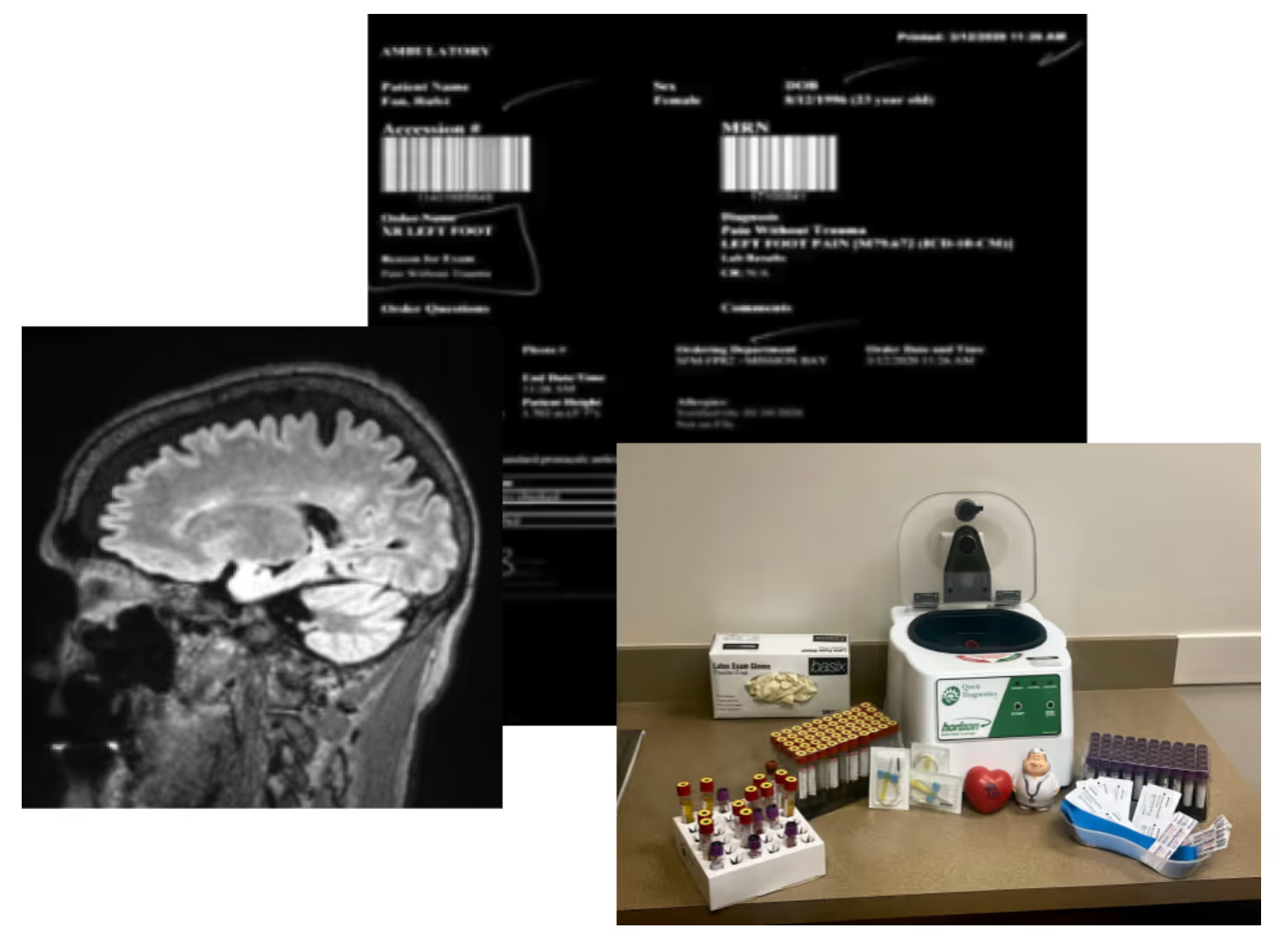
- Record abstraction. AI agents take the first pass at pulling structured data out of medical records, and our team reviews and adjudicates the results.
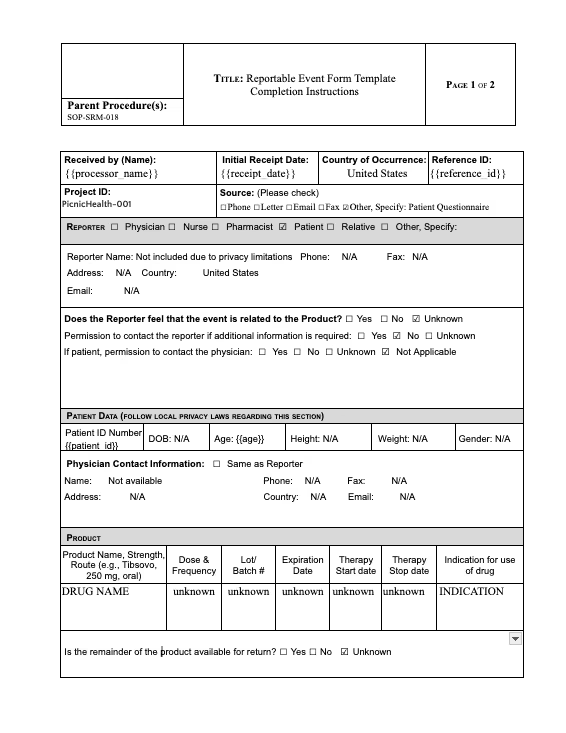
- Study setup. A study is created from its contract. The documents, the folder structure, the team and the study details are stood up from templates, instead of being assembled by hand every time.
- Configuration. Agents draft the schedule of activities, the surveys, the qualification rules and the case report forms. A person reviews and approves each one.
- Document drafting. Study documents start from templates and the study’s own details rather than a blank page. Recruitment and patient-facing materials that took weeks of drafting now take days. Our biostatisticians get a drafted starting point for analysis plans, and they write and own the analysis itself.
- Testing before launch. Every configuration is tested before a study goes live. Agents draft the test cases, run them end to end, and carry the sponsor through their own acceptance testing. Our team adjudicates the results.
- Changes mid-study. When a study detail changes, such as participant compensation, the system prepares updates across connected documents and configuration for the team to review and approve before they go live. This reduces manual edits and helps keep the study consistent.
- The work around the work. Meeting agendas and minutes are drafted automatically, and the decisions and tasks that come out of a study meeting land on the study’s record rather than in one person’s notes.
And with these changes, we’re seeing that quality increases. Errors that start upstream, and might slip past a QC check, are often caught by an agent before they cause downstream problems like a protocol deviation.
More time for the work that needs people
What’s changing is where our people spend their time. They spend less time rebuilding status reports from multiple systems, retyping dates into plans, or chasing down the latest version of a document. That work was never the expertise we hired for, and it was taking a large share of the week. The rigor of a study comes from people who know the science, the therapeutic area, and the sponsor. Our job is to make sure those people spend their time on the parts of a study that actually need them, starting with study and scientific design.
Every study we run has epidemiologists, scientists, and study managers responsible for its scientific rigor and delivery. A person reviews and approves each configuration before it goes live. A person makes the final determination on participant eligibility and adjudicates safety findings and protocol deviations. A person reviews data quality findings and approves each dataset before delivery. A person approves study documents and communications before they are shared externally. That’s by design.
Why we're passing it on
We're passing the savings through because efficiency in drug development only matters if it reaches the people the research is for.
A sponsor with budget left over can extend follow-up, add a cohort, or answer a question that would otherwise have been cut. That's how AI starts to change drug development: more evidence, sooner, for the same spend. And fewer promising therapies get shelved because the research costs too much.
Cost is the most visible benefit. The bigger gains are time, and fewer errors early in a study that turn into expensive problems later. Quality is still the decision that matters most. Lower prices are a side effect of building research better.
We’re built for outcomes, not hours. Together, let’s change how clinical research is done.